Loading...
Serving Huntington Beach, CA and surrounding areas. (657) 329-2772
Cracks, potholes, and sunken sections get worse fast in Southern California sun and salt air. We assess the damage, check the base, and repair it correctly so the fix holds - not just until the next hot summer.
Asphalt repair in Huntington Beach means removing or treating the damaged section and replacing it with fresh material that bonds to the surrounding surface - covering everything from narrow crack fills to full pothole patches, with most residential jobs completed in a single day and the surface ready to drive on within 24 hours.
The key difference between a repair that lasts and one that fails within a season is what happens before the new asphalt goes down. Cleaning out cracks, cutting clean edges on patches, and checking the base underneath are the steps most low-bid contractors skip. In Huntington Beach, where sandy coastal soils can shift and erode, a patch on a compromised base will crack again in the same spot.
Repair and ongoing maintenance work together. After the repair has cured, asphalt sealcoating protects the repaired surface from the UV oxidation that caused much of the damage in the first place. Staying on a sealing schedule every two to three years is the most effective way to avoid needing another repair call.
Fresh asphalt is dark and slightly flexible. When a driveway turns gray and develops a network of small cracks, that is oxidation - the UV damage that happens faster in Huntington Beach than in cooler regions. Catching it at this stage, before cracks widen, is when repair is most straightforward.
A pothole or soft, sunken area means the damage has moved past the surface and into the base. It is a tripping hazard, and it will get worse with every vehicle that crosses it. The sooner it is repaired, the less material needs to be replaced.
Huntington Beach does not get heavy rain often, but when it does, water should run off your driveway quickly. Puddles sitting on the surface mean the asphalt has settled unevenly or deteriorated enough to hold water. Standing water accelerates damage and signals that repair is overdue.
Small hairline cracks can be sealed relatively easily. Once a crack is wide or deep, water and roots can work their way in. In coastal areas with shifting soils, that moisture in the crack can cause the ground underneath to move, making the crack grow quickly.
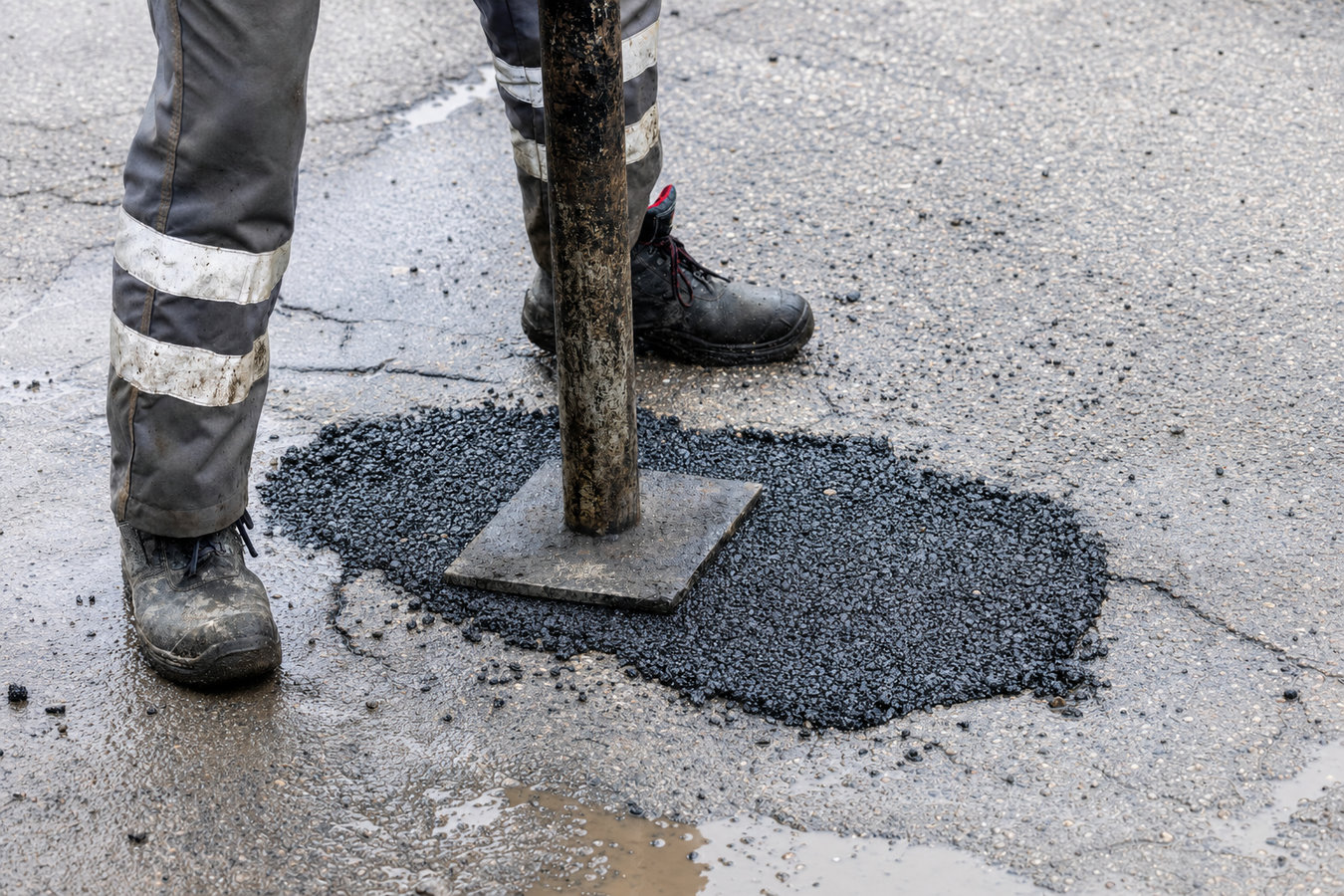
Not every driveway problem needs the same fix. For narrow cracks that have not compromised the base, asphalt crack sealing fills and seals the opening with flexible material, stopping water infiltration before the damage reaches the ground underneath. For larger failed sections - potholes, crumbled edges, or soft sunken areas - we cut clean edges around the damage, check and correct the base if needed, and place compacted fresh asphalt that sits flush with the surrounding surface.
When a driveway has widespread surface wear but the base is still solid, resurfacing is often more cost-effective than full replacement. And when damage has spread far enough that repair would cover more than half the surface, driveway paving is often the better long-term investment. We give you an honest assessment of which option fits your driveway's actual condition.
Narrow cracks that have not broken through the base are cleaned and filled with flexible material to keep water out and stop the damage from widening.
Damaged or missing sections are cut out with clean edges, base is checked and corrected if needed, and fresh asphalt is placed and compacted flush with the surrounding surface.
Larger areas of surface failure are addressed with saw-cut patches that bond tightly to surrounding asphalt - a more durable fix than cold-pour or overlay approaches.
When the surface has worn out but the base is still sound, a fresh layer of asphalt restores the full driving surface without a complete tear-out.
Huntington Beach driveways face conditions that most national repair guides do not account for. UV radiation and heat are the primary forces breaking down asphalt here, not freeze-thaw cycles. The sun oxidizes the binder in asphalt year-round, turning surfaces gray and brittle faster than in cooler climates. Salt air off the Pacific accelerates surface oxidation further, particularly for homes within a few miles of the water. Homeowners near the beach often find they need to reseal or repair their driveways more frequently than the average maintenance calendar suggests - and the ones who skip sealing entirely are usually calling for a full replacement within ten to fifteen years rather than twenty-plus.
Ground movement is the other local factor most homeowners do not think about until they have a failed patch. Much of coastal Orange County sits on expansive, clay-heavy soils that swell after rain and contract in dry spells. This movement can push up from underneath and crack even well-installed asphalt. We see this pattern consistently across the neighborhoods we work in, from Westminster to Costa Mesa. A repair crew that checks the base before placing new material is the difference between a fix that holds and one that cracks in the same spot within a year.
We respond within one business day. Describe what you are seeing - cracking, a pothole, edges crumbling - and we schedule an in-person visit. We do not quote firm prices over the phone because the base condition matters as much as the surface damage.
We look at the damage, check the base underneath, and determine the right repair approach - crack fill, patch, or resurface. You get a written estimate with a clear scope before any commitment.
We clean out cracks and cut clean edges on patches before placing any new material. Proper prep is what separates a repair that lasts years from one that fails in a single season. New asphalt is placed and compacted flush with the surrounding surface.
We walk you through how long to stay off the surface - typically 24 hours for most repairs in Huntington Beach's warm climate - and when to apply a sealcoat. Sealing after the repair has cured is the step that protects the investment long-term.
We respond within 1 business day. There is no obligation - just an honest look at the damage and a clear written quote covering the repair scope. Submit below and someone from our office will call to schedule your visit.
(657) 329-2772We hold an active California state contractor's license - verifiable at cslb.ca.gov - and carry general liability and workers' compensation coverage. Ask for our license number and proof of insurance before any work begins. You should never skip that step.
The most common reason repairs fail early is skipping the check underneath. We probe the base before placing new asphalt on every job. If the ground has shifted or eroded, we tell you upfront - before the work starts, not after.
We have been repairing driveways in Huntington Beach and across coastal Orange County since 2018. We know how local soils move, how fast UV degrades unprotected asphalt here, and what repair approaches hold up in this specific climate.
We visit your property, assess the damage, and give you a written quote that covers the full scope - including any base work needed. No surprises on the invoice and no work starting until you approve what is in the estimate.
The Asphalt Institute publishes material and installation standards specific to Southern California's hot, UV-intense climate. Following those guidelines - particularly on compaction and base assessment - is what separates repairs that hold for years from ones that need to be done again within a single season.
Preventive crack treatment that stops water from penetrating before damage reaches the base layer.
Learn MoreTargeted pothole and void repairs that restore a safe, smooth surface and eliminate hazardous depressions.
Learn MoreEvery crack that sits unrepaired through another coastal summer gets wider and deeper - call Huntington Beach Asphalt Paving now and stop the damage before it reaches the base.